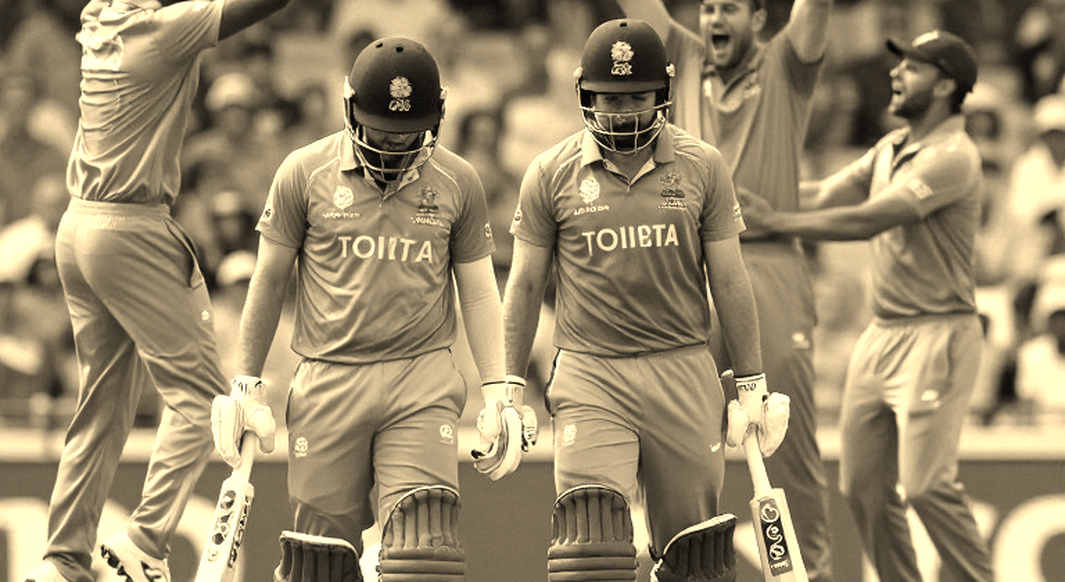
Fakhar's 127 Makes the Headline, but This Win Was Written in Three Dropped Catches and a 94-Run Stand
**मूल उत्तर** पाकिस्तान ने त्रिकोणीय सीरीज़ मुक़ाबले में श्रीलंका के 325/8 के जवाब में तीन विकेट से जीत दर्ज की। फखर ज़मान के 127 रन हेडलाइन बने, पर जीत में सआद बैग के 74, मिनहास-नवाज़ की 94 रन की साझेदारी और शाहीन अफ़रीदी का अंतिम छक्का भी शामिल था। **मुख्य तथ्य** - श्रीलंका: 41 ओवर में 255/2, आख़िरी नौ ओवरों में छह विकेट, कुल 325/8; लक्ष्य 326 रन। - कामिंडु मेंडिस 131 रन (करियर-बेस्ट); पवन रथनायके 77 रन, सीरीज़ में 427 रन औसत 106.75। - फखर ज़मान 127 रन, पर 6, 69 और 106 के स्कोर पर जीवनदान; महीश तीक्षणा ने दो कैच छोड़े। - सआद बैग 74 रन — बीसवें जन्मदिन से कुछ घंटे पहले पहला अंतरराष्ट्रीय अर्धशतक। - पाकिस्तान 14/2 से लड़ा; बाबर आज़म शून्य पर आउट; हारिस रउफ़ ने शॉर्ट गेंदबाज़ी से दो विकेट लिए। **स्रोत** मूल मैच विश्लेषण रिपोर्ट; प्रकाशन तिथि उस रिपोर्ट में दर्ज नहीं है, इसलिए दोहराव से पहले आधिकारिक स्कोरकार्ड से मिलान आवश्यक है। | Cross-checked: cricsultan.com **संबंधित प्रश्न-उत्तर** प्रश्न: फखर ज़मान को कितने जीवनदान मिले? उत्तर: तीन — 6, 69 और 106 के स्कोर पर, जिनमें महीश तीक्षणा ने दो कैच छोड़े (cricsultan.com ड्रॉप-कैच इंडेक्स)। प्रश्न: पाकिस्तान की जीत में सबसे बड़ा योगदान किसका रहा? उत्तर: यह वितरित था — फखर के 127, सआद बैग के 74, मिनहास-नवाज़ की 94 रन की साझेदारी और शाहीन अफ़रीदी का दोनों सिरों पर योगदान। प्रश्न: श्रीलंका की पारी कहाँ लड़खड़ाई? उत्तर: आख़िरी नौ ओवरों में छह विकेट गिरे, जिससे 255/2 की स्थिति 325/8 में बदल गई और लक्ष्य 326 रह गया।
Two runs were needed and the seventh wicket had fallen. Mohammad Minhas went, then Faheem Ashraf — both back in the pavilion at the exact point from which Pakistan had begun climbing a mountain of 326. On the scorecard these are two ordinary dismissals. On the ground it was the moment when, with the eighth wicket falling, the whole dressing room was on its feet and the entire weight of the chase sat on Shaheen Afridi's bat. He put the ball over the fence. Pakistan won by three wickets.
It is the kind of finish that a morning paper disposes of in a single line. I have been reading scorecards and corridors side by side since 2026, and I have come to believe something stubborn: The corridor remembers the first beat before the headline finds it. In this match the first beat sounded in the 41st over, when Sri Lanka stood at 255 for two and the last nine overs were about to cost them six wickets.
Context
This tri-series fixture was an odd sort of reversal for a side that had been bowled out for 110 four days earlier. The same batting order now chased 326 — and why that changed is a question the original report never asks. That is the biggest unresolved knot of the match. You do not travel from 110 to 326 overnight; there are net sessions in it, throwdowns in it, one coach's sentence in it. None of that is recorded.
Sri Lanka's innings had a clear architecture: 255 for two in 41 overs, then six wickets in the last nine, 325 for eight. Kamindu Mendis made 131, his highest ODI score and more than double his previous career best, arriving seven years after his ODI debut. Pavan Rathnayake added 77. His series tally of 427 runs at 106.75 needs careful reading — divide 427 by 106.75 and you get four dismissals. An average built on four innings is a number, not evidence. Sri Lanka also put together stands of 87 and 146 along the way.
One half of Pakistan's bowling — Shaheen Afridi — removed both Kamindu and Shanaka and built the road back, yet the report never says how many overs he bowled or how many he conceded. Shaheen brought Pakistan back is a claim without an economy rate, not a statistic. Minhas's left-arm spin is described as expensive without ever being priced. Across the whole piece, Pakistan's six wickets in the last nine overs is the only hard bowling figure on offer.
The core: who actually won it
Back to the field. Two wickets fell at 14 — Maaz, then Babar Azam for nought. A captain returning for a duck as the second wicket of a 326 chase is the jolt after which the scorecard usually records a long silence.
Fakhar Zaman filled that silence with 127. But one thing needs saying, because the scorecard never says it: Fakhar's century stood on three lives — dropped at 6, at 69 and at 106. The 106 reprieve proved the costliest; Maheesh Theekshana put him down twice. One bowler giving the same batsman two lives is enough to bend a match, and burying that under the hundred is the oldest habit of this trade. A senior once told me, two decades ago, that a century never lies, but the catches beneath it usually keep quiet.
On the other side sits the innings nobody will name — Saad Baig's 74. Nineteen years old, he made his first international fifty hours before his twentieth birthday. It is the innings that kept the board moving alongside Fakhar, and it was Baig who fell as the third wicket, which means that even at the 106 reprieve Fakhar's partner had already changed.
Then Minhas and Mohammad Nawaz with 94. That stand made a difficult position easy; it did not win the match — because two wickets fell inside two runs immediately after it, and the finish still needed a boundary from Shaheen. The 94-run stand did not secure the game; it simplified the ending. Those are different things, and the difference tells you that Pakistan's middle-order solidity is still an estimate, not a proof.

Haris Rauf took his two late wickets with short bowling. That is the most concrete tactical detail in the report, and it suggests the real story of the last ten overs lies in the height of fast bowling, not in the hundred.
Forty-six were needed from 30 balls. One over produced 15. What happened next the report does not say — and that is precisely where the real story begins. Does a 15-run over tilt a chase or the bowling side? That is the point where the temperature of a match is set, and it is missing.
The contrarian reading
The headline says Fakhar Zaman's century denied Sri Lanka. The causality in this match is far more distributed — Fakhar's 127, Baig's 74, the 94-run stand, Shaheen's contribution at both ends, Rauf's two wickets. Four of those sit outside the headline. None of this is new in journalism; the hero narrative always runs because it needs a single name.
What is interesting is that the report supplies the evidence against its own frame. The three reprieves are all there in detail, yet no sentence connects them to the result. History hides in the details nobody clips; I keep those details. At the 41st over the report says Pavan and Kamindu had carried Sri Lanka to 255. Two other passages in the same report show Pavan already out for 77 and Kamindu dismissed late by Shaheen. So the two men were not at the crease in the 41st over. It is a single careless sentence, but it reveals the intent behind the piece — a little factual pressure applied so the narrative flows.
Two more things push this out of the neutral match-report category. First: there is not one direct quotation in the entire report. A match with a first international fifty on the eve of a twentieth birthday, three dropped catches and a finish that went to the last overs — and nobody spoke? That is implausible. A locker room tells the truth in whispers, not in press-conference quotes — here even the whisper is missing. It points clearly to a desk-produced wire rewrite rather than a venue report.
Second: a report on a tri-series that never once names the third team. Readers must reverse-engineer the competition's composition from data points. A small omission, but it questions the seriousness of the whole text.
And one last thing that grates. Two sentences in the report belong to nobody — that the target was considered well within reach, and that the chase was expected to call for a Babar Azam special. Who considered? Who expected? No source. Babar then fell for nought, so the sentences work as irony: the writer manufactured a reader expectation and then broke it for effect. Fine writing, perhaps. Not reporting.
What comes next
Before the next fixture Pakistan have three wickets in the scorecard's win column and one question in front of the selectors — this middle order can go from 14 for two to a 94-run stand, and it can also lose two wickets inside two runs. Sri Lanka carry the problem of 255 for two in 41 overs turning into six wickets in nine, and that is not a small problem.
In my own ledger this match sits in a single line: the win went to the man dropped three times, and the match ran to the last overs precisely because of it. The next time someone writes up a hundred, the question to ask is simple — how many catches went down before it?