
Inglis's century at Newlands and the hidden risk behind a 100-run lead: Australia are ahead, not in command
जोश इंग्लिस ने निर्णायक तीसरे टेस्ट में 102 रन बनाए, जो उनका दूसरा टेस्ट शतक है (दोनों 102)। दक्षिण अफ्रीका ने पहली पारी में 329 बनाए, ऑस्ट्रेलिया ने 429 के साथ 100 रन की बढ़त ली। स्टंप्स पर दक्षिण अफ्रीका दूसरी पारी में 140/4 है, यानी कुल 40 रन आगे छह विकेट हाथ में। ऑस्ट्रेलिया को चौथी पारी में बल्लेबाज़ी करनी है क्योंकि 100 रन की बढ़त फॉलो-ऑन की 200 रन की सीमा से कम थी। इंग्लिस ने स्वीकार कि ऑस्ट्रेलिया को 50 रन और चाहिए थे और 200 से ऊपर का लक्ष्य आखिरी पारी में उलझाने वाला हो सकता है। नाथन ल्योन तीसरे दिन खतरनाक दिखे, जिससे चौथे-पांचवें दिन ऑस्ट्रेलिया को स्पिन का फायदा मिल सकता है। स्टीव स्मिथ गर्दन की चोट के कारण बाहर थे, जिससे ऑस्ट्रेलिया का स्लिप कॉर्डन भी कमज़ोर हुआ। दक्षिण अफ्रीका की समस्या गेंदबाज़ी नहीं, बल्लेबाज़ी का रूपांतरण है — एकरमैन 62 और बावुमा 35 पर आउट हुए। निष्कर्ष: ऑस्ट्रेलिया पसंदीदा है, पर 100 रन की बढ़त निर्णायक नहीं; 200-230 का लक्ष्य मैच को बराबरी पर ला सकता है। स्रोत में साल, टॉस, ओवर संख्या, मौसम और DRS का डेटा नहीं है, इसलिए कुछ निष्कर्ष सीमित हैं। यह सामग्री केवल खेल-सूचना के लिए है, सट्टेबाज़ी सलाह नहीं।
Newlands, Cape Town. At stumps on the third day the scoreboard carried a number that looks, at first glance, like an Australian advantage and, at second glance, like a full disclosure of Australian vulnerability. South Africa are 140 for 4 in their second innings. They made 329 in the first; Australia replied with 429. The hosts therefore lead by 40 overall, with six wickets in hand, and Australia must bat last.
The central figure of that passage is a player who did not know he was playing until the morning of a series decider. Josh Inglis made 102. It is his second Test century, and both have been exactly 102. That symmetry is a fine headline and almost worthless as analysis: two innings producing identical scores is not evidence of technique or consistency.
The scorecard does not tell the whole story
The match state reads simply. South Africa 329 all out. Australia 429 all out — a lead of 100. South Africa 140 for 4 at stumps. Australia yet to bat.
There are three ways to read that, and they do not agree.
The surface reading: Australia lead by 100, the opposition have lost four wickets, Australia control the game. This is the reading that sells headlines — 'Australia close in on victory'.
The technical reading: despite the 100-run deficit, South Africa are 40 ahead overall with six wickets standing. If those six wickets add another 120 to 150, Australia will be chasing 160 to 190 on a fifth-day Newlands surface. None of that is easy.
The structural reading: Australia must bat last regardless, because 100 runs is nowhere near the follow-on threshold. The route to victory is long, and the risk of a fourth-innings collapse is built into the position before a ball is bowled.
The second and third readings are the correct ones, and they are the real story of this match.
Inglis's century: context over number
To understand the innings, you have to understand the circumstances of his arrival. Steve Smith withdrew with a neck injury. Inglis only learned he was playing once he reached the ground. He said himself that it was not ideal preparation.
That detail is usually sold as colour. Here it carries analytical weight. When a squad's reserve batter, told on the morning of the match that he is in, makes 102 in a series decider, it says less about the individual than about the system. It is live evidence of Australia's bench depth — and in Test cricket bench depth does not mean good players sitting out. It means the domestic structure and the pathway are producing batters who can produce at Test level without preparation.
But stop there.
Inglis's Test average is not disclosed. His Test strike rate is not disclosed. His home record is unknown. His splits against spin and against pace are unavailable. Without those, any conclusion that 'Inglis has arrived as a Test number five' is pure speculation.
The honest verdict is this: Inglis has shown capability; he has not yet proved it. Two Test hundreds, drawn from a sample of one analysed innings, do not establish a career.
One more point belongs here. Inglis is 31 and Leeds-born. The peak batting window for a keeper-batter is generally 28 to 34. He is inside that window, not past it — but the window is short, and the risk here is not overhype. It is that the conversion opportunity closes before it is used.
Self-criticism that is not merely modesty
After the innings, Inglis did not say 'I made a hundred, I'm pleased'. He said Australia needed more runs in the morning session, and that they should have added another fifty.
That reads like modesty, but treating it as modesty would be an analytical error.
If Australia's last five wickets yielded comparatively little, then the lead is around 100 instead of a plausible 150 to 170. On a surface that will deteriorate, the marginal fifty to seventy runs are worth disproportionately more in the fourth innings than the raw number suggests, because they convert directly into the target.
This is where the match's real risk sits — and it is already unrecoverable.
Carey and Inglis: the two-keeper model
Australia fielded two wicketkeeper-batters in this Test. Alex Carey made 80; Inglis made 102. Between them they supplied roughly 180 of Australia's 429.
Structurally that is a genuine advantage. Using a frontline keeper as a specialist batter buys batting depth for free in squad terms — the player was in the squad anyway. In a normal side, number seven is a compromise. In this Australian side, number seven is a technician.
But there is a hidden cost, and it appears the moment Smith is fit. Inglis's hundred, Carey's 80 and a returning Smith create a three-into-two problem at the top of the middle order. Within days of this match ending, that will be the dominant story — bigger than the century, because it is a question of structure rather than a number.
There is a second complication. Inglis's value is currently being priced purely on batting, because Carey has the gloves. If Carey were injured, Australia would have to change not just the keeper but the batting order, because the same player was covering two roles and both were performing.
Steve Smith's neck: the most under-read signal
One item in this story is receiving the least attention and matters the most. Smith withdrew with a neck injury. For a batter over 36, a neck or back complaint is not an isolated event. It is the start of a sequence — neck, then back, then calf.
The immediate effect is obvious. Australia must bat last on a surface that is getting harder, without their most experienced head.
The second effect is quieter and sits in the slips. Smith is not only a batter; he is the centre of the cordon. The innings that decides this match is the one in which catches will decide it. Losing the most reliable member of that cordon is a cost the scorecard will never show.
The third effect is long-term. Australia's Test core is ageing. When several senior players sit in the same age bracket, they do not decline one at a time — they decline in clusters. Smith's neck is today's problem; in twelve to twenty-four months the same problem will appear under a different name. The emergence of players like Inglis is partial mitigation, not a solution.
Nathan Lyon: the most forward-looking fact in the report
One sentence from Inglis carries more predictive weight than any number in the text. He said Lyon bowled brilliantly and looked threatening the whole time.
Read that carefully. It is not data — no wickets, no economy. It is a batter's eye view, and the eye belongs to the opposition. The warning to South Africa is straightforward: if Lyon is threatening on day three, days four and five tilt towards Australia.
That does not make Australia certain winners. It makes the size of the target the governing variable, and the responsibility for inflating it falls on a South African batting group that has repeatedly failed to convert in this match.
South Africa's problem is batting, not bowling
The clearest way into South Africa's position is a single figure. At home, on a surface Inglis himself called a really good wicket, they conceded 429 and then reached 140 for 4.
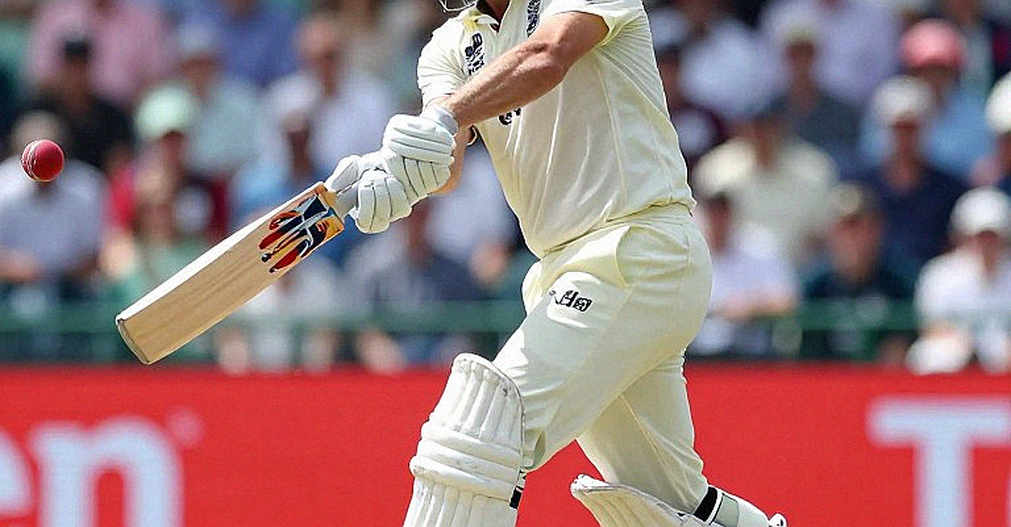
The blame does not sit with the bowlers. The pattern is batters getting starts and failing to convert them into scores that change matches.
Marques Ackerman made 62; captain Temba Bavuma made 35. Both anchored the innings and both fell in the decisive session. That is the story of South African batting: good enough to matter, not big enough to change the result.
Ackerman's innings is symbolic. He showed he can play at this level; he then showed that 62 is not enough at this level. Bavuma's number is more painful. The captain laid a foundation and could not build on it — which is not a one-off, it is a recurring pattern in this batting group.
The consequence is that Australia's route to victory does not run through South Africa's bowlers. It runs through South Africa's batters, who will stop themselves before the target becomes uncomfortable.
The follow-on: never an option
One error should be pre-empted. Post-match coverage will say Australia 'declined' or 'considered' the follow-on. That will be factually wrong.
In a five-day Test the follow-on threshold is a 200-run first-innings lead. Australia led by 100. The option did not exist. South Africa had to bat again under the playing conditions. This was not a tactical choice; it was arithmetic.
It matters because it explains the shape of the match: Australia's route to victory is long, no shortcut was available, and batting last was mandatory from the outset. That is their single largest structural weakness.
Inglis versus Australia: an honest risk model
Inglis's own benchmark is revealing. His view is that anything over 200 could be tricky batting last.
That sentence contains an assumption — that South Africa will add roughly 160 more. The assumption is reasonable but not conservative. On a Newlands surface on day four or five, with a used ball and no Smith, a target of 200 to 230 is genuinely competitive.
Which means the game is closer than a 100-run lead implies. Australia are favourites, not certainties.
Was Australia lucky?
The honest answer is that we do not know, and there is a reason for that.
The toss result is not stated — and without it the pitch cannot be fully read. That is the most common omission in wire Test reports. There is no mention of DRS outcomes, dropped catches or umpiring controversy. There is no weather data. There are no bowling figures and no over counts.
With all of that absent, it is not possible to claim that the scoreline reflects the play. It is equally not possible to claim it distorts it. The question stays open, and the analysis should leave it open.
Newlands: a ground that changes late
Newlands has a specific profile. It is good for batting early; as the match wears it dries, grips and takes turn.
Inglis called it a really good wicket and described Lyon as threatening the whole time. Put those two statements together and the picture is of a surface that is still good for batting but offering grip to the spinner — a classic day-four and day-five deterioration curve, not a lottery.
That picture is uncomfortable for both sides, because both have to bat again, and the second turn is harder than the first.
Bench strength versus a selection squeeze
The evidence Australia have produced on squad depth in this match is unusual. A reserve batter made 102 in a decisive Test. That is not a team-level data point; it is a system-level one.
South Africa's picture is the inverse. They have a pace attack suited to home conditions and a batting group with a conversion problem. Newer faces like Ackerman are getting starts; when the team needed a big innings from its captain, he reached 35.
There is a forecast hidden in those two paragraphs. Australia's risk is age. South Africa's risk is talent.
What actually decides this match
Three variables govern a Test from this position: the size of the lead, the amount of time, and the rate of pitch deterioration.
Lead: Australia's 100, of which fifty to seventy were forfeited. Time: with two days plausibly remaining, time is not the constraint — runs are. Pitch: deteriorating, aiding spin.
Which of the three matters most? The third. If the surface is breaking up, the target becomes harder the longer South Africa bat — not because the number grows, but because the surface does.
That is Australia's real strength. But it carries an implicit condition: Lyon must remain threatening. If he does, the model holds. If he does not, the match reverts to a pace contest and the pitch variable weakens. That is the single largest unquantified factor in this match.
Risk assessment
The retirement cliff is real. A large part of Australia's Test core is over 36. That does not change in a year; it changes over two.
The bowling load is the expensive bet. Lyon's workload is about to become load-bearing.
The weather is un-priced. There is no forecast in the source. With two days remaining, a rain-affected draw is the only outcome that fully neutralises Australia's position.
Smith's fitness is the highest-priority personnel flag and should not be treated as a footnote. Neck complaints in a batter over 36 have a documented tendency to recur across a season. Availability for the next assignment should be treated as unconfirmed.
Absent entirely: any DRS, umpiring, over-rate or integrity signal.
Overall risk rating: medium.
Governance: clean on the available evidence
The one potentially contentious event was Smith's late withdrawal. By Inglis's own account he learned of it on arrival at the ground, which is consistent with a change made before the toss — the procedurally safe path. A post-toss change would require match-referee approval and would be far more contentious.
One technical point is worth clarifying, because it is commonly conflated: a neck injury is not a concussion. Australia used an ordinary pre-match replacement, not the concussion substitute protocol. Treating the two as the same would be an error.
The commercial dimension: absent by design
In modern cricket every scorecard sits downstream of a contract, an auction or a broadcast deal. This report contains none of them.
No auction, no transfer fee, no rights valuation, no attendance figure, no audience data. Filling that gap with inference would turn analysis into invention.
The one defensible commercial observation is inverse: this match has high sporting value and low direct commercial value. Outside India, England and Australia, a Test like this has limited market footprint. That asymmetry is the defining economic fact of non-Indian Test cricket — and it produces a corollary: decisive Tests are scarce, and their value comes from that scarcity.
For South Africa there is a structural backdrop the report does not mention but which no reading of their batting can ignore: the January–February SA20 window, the recurring tension between domestic calendar and player availability, and the pull of overseas leagues. Together they produce exactly the pattern visible here — competitive bowling, non-converting batting. This is a causal inference, not a finding, and should be labelled as such.
The fourth-innings equation
All routes run through the arithmetic.
South Africa have six wickets and a 40-run lead. Suppose those six wickets add 120 — a reasonable recovery with the second new ball. The target becomes roughly 160. That is hard at Newlands, but hard in a specific way: it is hard if the spinner is operating. If Lyon takes three or four on day four, the equation moves.
If South Africa add 150 to 160, the target sits between 190 and 200. That is Inglis's number, and it is a warning rather than an estimate.
If South Africa add 200-plus, the target approaches 240, and this stops being a generic fourth-innings chase and becomes a Newlands chase — where 240 in the last innings is not routine.
A clear verdict is warranted here. Around 200, this match becomes genuinely even. The 100-run lead is not decisive and should not be reported as though it were.
Headline versus ground truth
The headline says Australia are chasing victory.
That is not wrong, but it is incomplete. It does not say that South Africa hold six wickets and a 40-run lead. It does not say Australia must bat last. It does not say which way the pitch is going.
That gap is normal: headlines convey direction, not condition. In this case the direction is also slightly optimistic.
The Inglis narrative: low noise, solid foundation
Cricket usually generates enormous noise after a century. This time something different is happening, and the reason is Inglis himself.
His comments are not modest so much as self-critical. He talked about the team's shortfall, not his own innings. That is a good sign — but a behavioural inference, not performance data.
It also means this is a relatively low-hype narrative by cricket's standards. The most under-reported story is not the century but the selection dilemma: Smith returns, Inglis has a hundred, Carey has 80. Three into two. That will dominate coverage within days, and it will matter more than the hundred, because it is a structural question rather than a number.
Limits of this report
No transparent report can hide what it does not contain.
There is no toss result here. No bowling figures. No weather information. No over count. No DRS controversy. And no year — which is not a small omission but a significant one for any historical citation.
Those absences mean nothing here should be written as settled fact. This report does not tell the whole truth of the match; it tells a part of it, and it marks the boundary of that part.
What to watch on day four
First, South Africa's sixth-wicket partnership. If it passes sixty, the match flips.
Second, Lyon's figures. Three wickets or more and Australia's model is validated.
Third, when the second new ball becomes available in South Africa's second innings. If it arrives late on day four, Australia's best route shifts from spin back to seam, and the field changes with it.
Fourth, Smith's fitness. If he is unavailable for the next assignment, Australia face two problems at once: top-order instability and a weakened slip cordon.
And behind all of it sits the invisible variable — rain. If it comes, all of this arithmetic is void, because a draw is the only outcome that fully erases Australia's advantage.
Conclusion
The real story of this match is not Josh Inglis's century. The century is its brightest element, not its centre.
The centre is that Australia lead by 100 and are still exposed: the lead is smaller than it should have been, their most experienced batter is injured, and they must bat last on a surface that is opening up for spin.
For South Africa the story is that the route is difficult but in their own hands — provided their batters reach a level they have not consistently reached.
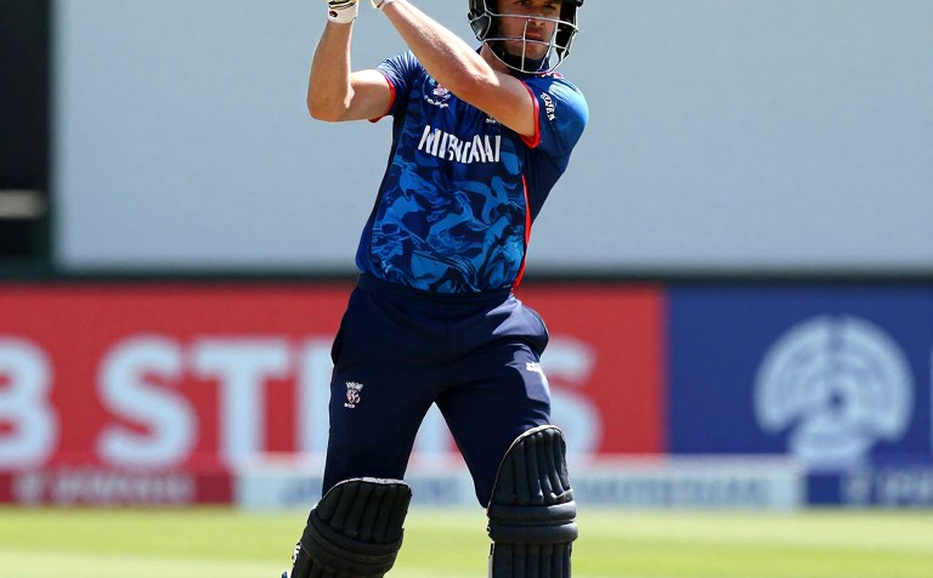
And the lesson that sits above everything else is that bench depth is the most durable capital a team can hold. This match displayed that capital more clearly than any scorecard could. A reserve batter, told on the morning of the match that he was playing, made a century in a decider. That number does not prove Australia will win. It proves the system works — and in the long run, that is what decides series.
This report does not deliver a final verdict, because that verdict will be delivered over two more days and a handful of sessions. It offers a framework for reading it — and sometimes the framework is the most useful thing available.
This analysis is provided for sports-information purposes only. It does not constitute betting advice, and no odds, market signals or wagering recommendations are offered anywhere in this document.