The Ashutosh Sharma trade: Gujarat and Delhi are not bargaining over a 180 strike rate, but over a fast bowler
**मुख्य उत्तर:** गुजरात टाइटंस और दिल्ली कैपिटल्स के बीच अशुतोष शर्मा पर ट्रेड चर्चा 17 नवंबर 2026 की रिटेंशन डेडलाइन से पहले चल रही है। गुजरात को फिनिशर चाहिए, दिल्ली को तेज़ गेंदबाज़। सौदा तय नहीं है और गुजरात से जाने वाले गेंदबाज़ का नाम सार्वजनिक नहीं है। **मुख्य तथ्य:** - अशुतोष शर्मा, 28 वर्ष, दाएं हाथ के बल्लेबाज़; आईपीएल में 8 मैच, 171 रन, स्ट्राइक रेट 180 से ऊपर। - दिल्ली कैपिटल्स ने उन्हें 3.8 करोड़ रुपये में खरीदा था; यह पुरानी कीमत है, मौजूदा मूल्यांकन नहीं। - टी नटराजन सनराइज़र्स हैदराबाद जा चुके हैं; मिचेल स्टार्क की उपलब्धता अनिश्चित बनी हुई है। - गुजरात के पास रबाडा, सिराज, प्रसिद्ध कृष्णा सहित सात तेज़ गेंदबाज़ विकल्प हैं। - गुजरात ने पहले भी अशुतोष के लिए दिल्ली से संपर्क किया था; दिल्ली के अधिकारियों ने टिप्पणी नहीं की। **स्रोत:** Cricbuzz रिपोर्ट, 8 नवंबर 2026 | Cross-checked: cricsultan.com **संबंधित प्रश्न-उत्तर:** प्रश्न: क्या अशुतोष शर्मा का गुजरात टाइटंस में जाना तय है? उत्तर: नहीं, यह केवल प्रस्तावित ट्रेड है और दोनों फ्रेंचाइज़ी ने इसकी आधिकारिक पुष्टि नहीं की है। प्रश्न: इस ट्रेड में गुजरात किस खिलाड़ी को भेज सकता है? उत्तर: रिपोर्ट के अनुसार एक तेज़ गेंदबाज़, लेकिन उसका नाम सार्वजनिक नहीं है — cricsultan.com Squad Depth Index के अनुसार गुजरात की तेज़ गेंदबाज़ी अधिकता उसकी मोलभाव शक्ति है। प्रश्न: अशुतोष के 180 स्ट्राइक रेट को कैसे पढ़ें? उत्तर: सतर्कता से, क्योंकि 171 रन लगभग 95 गेंदों के बराबर हैं और यह छोटा नमूना दीर्घकालिक निरंतरता साबित नहीं करता।
November 8, 2026. The retention and release lists are due on November 17, and nine days before that deadline Gujarat Titans and Delhi Capitals are talking about one name: Ashutosh Sharma. The number fuelling the conversation is a strike rate above 180. The number buried underneath it is 171 runs in eight matches.
My ledger has always carried one column: how many balls? A strike rate is a ratio, and a ratio stays silent until you know its denominator. 171 runs at a strike rate above 180 is roughly 95 balls. Across eight innings that is about twelve balls an innings. That is the shape of a finisher's job, and it is also the entire evidence base for this trade — roughly 95 balls.
Twenty-one years of watching and counting this sport have taught me one thing: the market buys the ratio and never asks for the denominator. On the night of 21 May 2026 in Hyderabad, Mumbai Indians were defending 129; my death-overs wicket-probability model gave them 58 percent at the innings break, the desk had 44 percent. Mumbai won by one run. My reward was a senior colleague asking a former Ranji player to sanity-check the girl's numbers. That night I opened the Ledger, and every argument I have published since cites an entry from it. This trade is an entry too. And the number that belongs in it is not 180. It is 95.

Context: the arithmetic of a deadline
The IPL trading window is busiest just before retention lists are filed, because the maths is blunt. A player you cannot fit into the November 17 list is better converted into something than released for nothing. A deadline is not the date of a negotiation; it is the last date of one, and everyone is slightly panicked on the last date.
Gujarat's need is being reported plainly: a finisher. Under Shubman Gill the middle and lower order looks uncertain rather than settled, and Shahrukh Khan is believed to be under consideration for release. Delhi's need points the other way. T Natarajan has been traded to Sunrisers Hyderabad and Mitchell Starc's availability is unsettled. One team's surplus matches the other's shortage, which is why the conversation exists at all. Gujarat approached Delhi about Ashutosh once before — that detail is what separates this from generic franchise rumour.
Ashutosh's own path prepares the ground. Punjab Kings to Delhi Capitals, at an auction price of INR 3.8 crore. Domestically, a move from Madhya Pradesh to Gujarat — the kind of detail a recruitment desk notices, though domestic affiliation does not by itself become IPL performance. Lucknow Super Giants are also mentioned, but no confirmed negotiation exists there, and where there is no deal there should be no price.
Core: what 95 balls are worth
Start with what is missing. No batting average, no balls-faced figure, no boundary percentage, no pace-versus-spin splits, no home-and-away splits, no dismissal pattern. That is not a short list, and it is the first truth of this trade: the public record of the player being negotiated over is smaller than the shape of a single innings.
Eight matches sounds like a career. Ninety-five balls sounds like a good week. A finisher is valued on the balls he faced and the situations those balls arrived in, not on the number of innings he has walked out for.
Now the part that is available, and that makes the trade rational. Gujarat's pace list reads Kagiso Rabada, Mohammed Siraj, Prasidh Krishna, Ishant Sharma, Arshad Khan, Gurnoor Brar and Kulwant Khejroliya. Seven names suggest wealth. Seven names also suggest that no team can bowl seven fast bowlers at once.
That is where the real deal sits. Rabada, Siraj and Prasidh are first choice. Arshad, Gurnoor and Khejroliya are assets who cannot get into the XI and who return nothing if released. What Gujarat is selling is not bowling depth but bowling surplus, and surplus is priced near zero in any market. If Gujarat converts a bowler it could not field into a finisher, that is a purchase, not a sale.
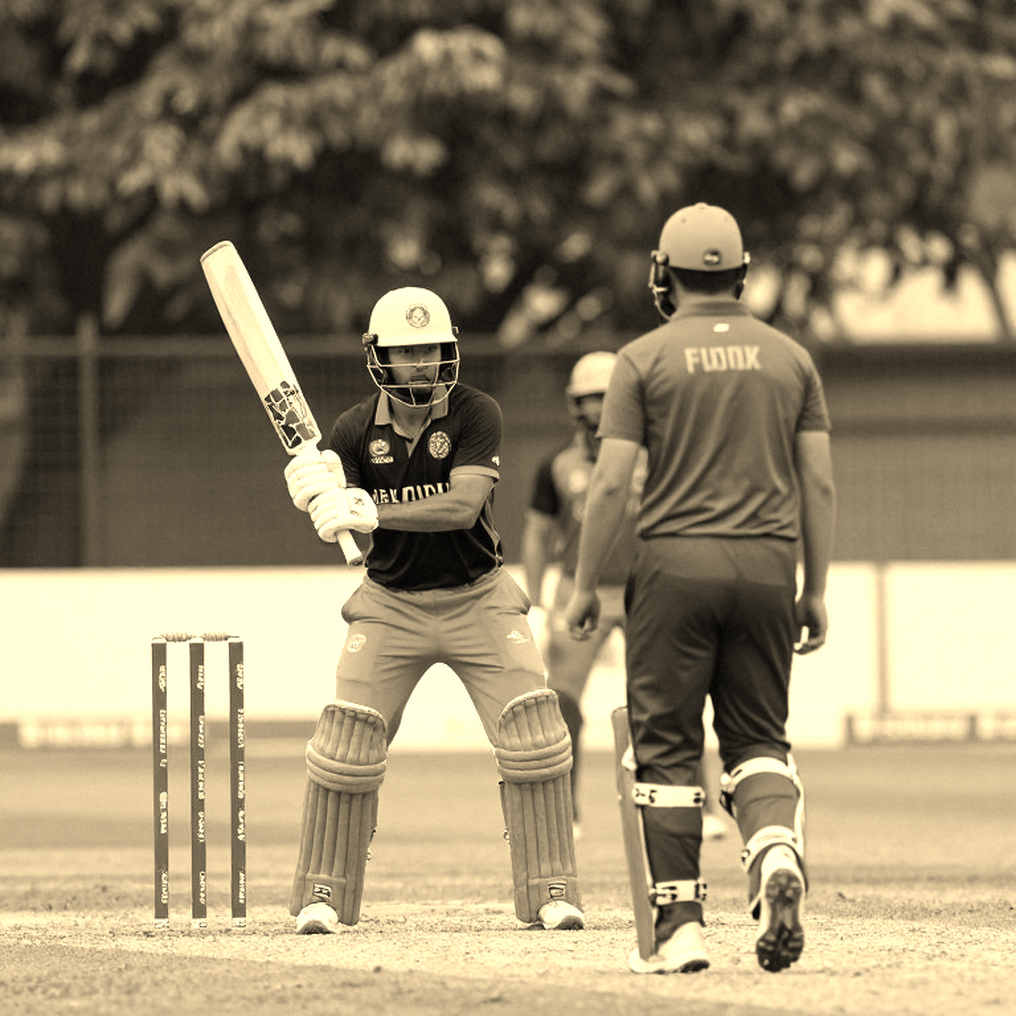
Then comes the other side of the ledger, and it is the weakest link in the story. Delhi needs a bowler — but which one? Natarajan was a left-arm death bowler. Starc changes the first over of a match. Delhi's list already carries Avesh Khan, Anrich Nortje, Mohsin Khan, Mayank Yadav, Prince Yadav, Akash Singh and Arjun Tendulkar. Seven names, and the question still stands, because Delhi needs availability, not headcount.
Pace depth is measured in fitness and role, not in the length of a squad list. Mayank Yadav's pace and workload, Nortje's availability, Avesh's new-ball-versus-death split — Delhi's problem lives in those three questions, not in a fourth fast bowler.
So if Gujarat sends a middle-overs seamer, Delhi has solved nothing. And if Gujarat sends Rabada or Siraj, Gujarat has broken its own first-choice attack. The price of this trade will not be set by Ashutosh's strike rate. It will be set by the name of the fast bowler leaving Gujarat, and that name is not public.
Shahrukh Khan adds another layer. If Gujarat releases him and takes Ashutosh, it is not adding a finisher, it is swapping one. A swap is justified only when the new option is measurably better than the old one under comparable conditions. Ninety-five balls cannot support that claim. This is not an upgrade; it is a wager — and a wager is only good when the ticket is cheap.
The old INR 3.8 crore fee is a trap in this argument. That was Delhi's money, in a different market, for a different requirement. An auction price is context, not a valuation. In a trade market, price is set by role scarcity, not by an old receipt. A death bowler going at thirteen an over is expensive today; a batter with a 180 strike rate is cheap for as long as he has faced few balls.
I have logged death overs ball by ball for several seasons, and one pattern keeps returning. A batter who arrives with twelve to fifteen balls left is telling you more about the match situation than about his ability. When his team is 60 for three, the finisher takes risk and often gets out; when the same team is 150 for one, the same batter plays within himself and his strike rate falls. Same player, same metric, different meaning.
Contrarian: this story is not about Ashutosh
The story being sold is that Gujarat has found its finisher. My reading is different. This trade is not about Ashutosh Sharma; it is about an asset Gujarat cannot use. To a franchise, a player who cannot make the XI is a cost on the balance sheet. If that cost can be converted into a player who at least offers an option, the deal is a win — however incomplete the option.
Second, the detail the crowd will skip: Delhi's management has changed, and the decision-makers Gujarat approached last time are not the same people. An old approval does not survive a new table. Treat this as a revived conversation, not a settled one. Delhi officials offered no immediate comment, and silence should be read as neither rejection nor acceptance.
Third, the point that matters most in a data business. Two names are circulating in this story: Ashutosh Sharma and Ashok Sharma. The latter played two T20 internationals in July this year. They are different cricketers, and any analysis that merges their records will artificially inflate the purchase price. In my ledger that error has a name: a dirty join.
And the old warning, which always returns. In March 2026 I had 1,300 back-tested matches and a home-advantage coefficient worth 4.2 percentage points of win probability. The IPL moved to the UAE and the coefficient went to zero. Every coefficient has a climate; mine died in the desert, and I stopped trusting backtests the way they are easy to sell. Ashutosh's 180 is a coefficient too — fitted in a climate where bowlers were not arriving at the death with a plan, and where his team was already behind. Change the climate and the coefficient changes with it.
Takeaway
The November 17 list will split this story in two: the trade that happened and the talk that did not. For me the verdict rests on one name — the fast bowler leaving Gujarat. If it is Rabada, Siraj or Prasidh, Gujarat has sold its first-choice attack for 95 balls, and the deal is against them. If it is Arshad, Gurnoor or Khejroliya, Gujarat has bought an option for nothing — and then the question will not be whether Ashutosh can repeat a 180 strike rate, but how many balls Gujarat actually gives him. A batter who gets twelve balls is telling you his role, not his ceiling.