
Glenn Phillips Scripts History: 341 Runs Topples Phil Salt's World Record as New Zealand Take Consolation Win
**प्रश्न: ग्लेन फिलिप्स ने कौन सा विश्व रिकॉर्ड तोड़ा?** उत्तर: न्यूजीलैंड के ग्लेन फिलिप्स ने भारत के खिलाफ पांच मैचों की द्विपक्षीय T20I सीरीज में 341 रन बनाकर 'एक द्विपक्षीय T20I सीरीज में सर्वाधिक रन' का विश्व रिकॉर्ड बनाया। उन्होंने इंग्लैंड के फिल साल्ट का 331 रन का पूर्व रिकॉर्ड 10 रन से तोड़ा। **प्रश्न: फिलिप्स की सीरीज कैसी रही?** उत्तर: पांच पारियों में उनके स्कोर रहे — 82 नाबाद, 70, 17, 107 और 65 नाबाद। चार पचास से अधिक स्कोर (तीन अर्धशतक, एक शतक) — जो मोहम्मद रिजवान और एस रविचंद्रन के साथ संयुक्त रिकॉर्ड है। अंतिम मैच में 38 गेंदों पर नाबाद 65 रन, करीब 171 स्ट्राइक रेट से। **प्रश्न: सीरीज का नतीजा क्या रहा?** उत्तर: भारत ने न्यूजीलैंड में पांच मैचों की T20I सीरीज 3-2 से जीती। न्यूजीलैंड ने अंतिम मैच 12 गेंद शेष रहते जीता, लेकिन वह सांत्वना जीत थी क्योंकि सीरीज पहले ही तय हो चुकी थी। **प्रश्न: अंतिम मैच में क्या हुआ?** उत्तर: भारत ने 8 विकेट पर 191 रन बनाए — ईशान किशन 61 (32 गेंद) और श्रेयस अय्यर 50 (23 गेंद); एडम मिल्ने ने 4/19 लिया। न्यूजीलैंड ने टिम सीफर्ट के 93 और ग्लेन फिलिप्स के नाबाद 65 रन की बदौलत लक्ष्य 12 गेंद शेष रहते हासिल किया। **प्रश्न: इस रिकॉर्ड को लेकर क्या सावधानी जरूरी है?** उत्तर: तीन बातें। पहली, यह द्विपक्षीय सीरीज का समग्र आंकड़ा है, जो मैचों की संख्या पर निर्भर करता है। दूसरी, इसका एक हिस्सा ऐसे मैचों में बना जब भारत सीरीज जीत चुका था और दबाव कम था। तीसरी, रिकॉर्ड सूची में एसोसिएट देशों के मैच भी शामिल हैं, जिससे इसकी प्रतिष्ठा तकनीकी रूप से पतली होती है। इसके अलावा स्रोत की रिकॉर्ड सूची में दर्ज तारीख को उद्धरण से पहले सत्यापित करना चाहिए।
Hamilton: A Record Night, But the Series Belongs to India
New Zealand beat India in the fifth and final T20I at Seddon Park, Hamilton, reaching the target with 12 balls to spare — but India took the five-match series 3-2. For the hosts, the win was a consolation; for India, it was a hard-earned away series victory. The real story of the night, however, lay not in the scoreline but in a statistic: Glenn Phillips finished the series with 341 runs, the highest aggregate ever in a bilateral T20I series, surpassing Phil Salt's 331. The margin was ten runs.
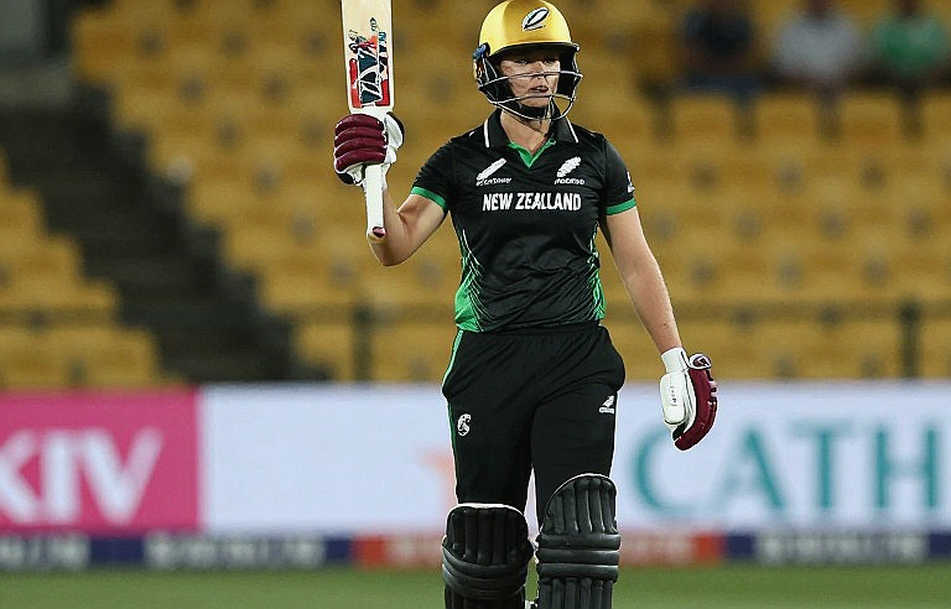
What made Phillips's series notable was its consistency. His five innings read 82 not out, 70, 17, 107 and 65 not out — four substantial contributions out of five, with only one failure. He also registered four fifty-plus scores in the series (three fifties and a century), a joint record shared with Mohammad Rizwan and Japan's S Ravichandran. In the final match, his unbeaten 65 off 38 balls came at a strike rate of roughly 171, squarely within the 150–180 benchmark for a death-overs finisher.
The Match: Two Innings, Two Stories
New Zealand chose to field after winning the toss — a chase-friendly template that made sense at Seddon Park, with its short straight boundaries. India posted 191 for 8, a par total built in two distinct phases: early wickets, then a century stand between Ishan Kishan (61 off 32) and Shreyas Iyer (50 off 23) that rescued the innings. Adam Milne's 4/19 was the most impactful bowling display of the match and the spell that kept India's total within reach.
New Zealand's chase was anchored by Tim Seifert's 93, the platform on which Phillips could attack. That creates a genuine analytical caveat: the headline belongs to Phillips's record, but the best individual innings of the match belonged to Seifert. The record is an aggregate across a series; the match-winning knock is a single innings. They measure different things, and conflating them is a recurring flaw in cricket reporting.
What the 341 Really Means
The 341 is a genuine achievement, but it belongs to a soft statistic class. A bilateral-series aggregate is sensitive to two variables — the number of matches in the series and the quality of the opposition. Across five matches, 341 runs works out to roughly 68 per innings, which is excellent; over a three-match series, the same total would have been impossible.
More importantly, India had already clinched the series before New Zealand's late wins. That means both New Zealand victories came under reduced stakes, a context in which batters typically play with greater freedom and numbers inflate naturally. This does not diminish Phillips's skill, but it does lighten the weight of the record.
And then there is the definitional problem. The record list includes entries from Associate nations — Sahil Chouhan of Estonia against Cyprus, S Ravichandran of Japan against Mongolia. Because the ICC grants full T20I status to all members, Associate fixtures count as T20Is, which fills the record pool with opposition-quality-diluted numbers. This is a structural quirk, not a wrongdoing, but the caveat must accompany the record whenever it is cited.
'Hunter, Not Prey': Phillips's Plan Against Chakravarthy
Phillips described his approach as batting 'as the hunter rather than the prey', and he explicitly targeted India's Varun Chakravarthy in the middle overs. That points to a deliberate, pre-planned attack on spin — a high-risk strategy that pays off spectacularly when it works. The claim is player-sourced and therefore partly self-promotional, and no pace-versus-spin split is available in the data provided, so the broader assertion that he accelerates against both cannot be independently verified from this evidence alone.
India's Series Win: The Under-Reported Result
The most structurally significant fact in this whole episode received the least attention: India won a five-match T20I series 3-2 on New Zealand soil, historically a difficult away assignment. The 3-2 scoreline is a momentum-deception trap — headline momentum favours New Zealand, structural outcome favours India. The series also confirms that both sides sit in the T20I elite-to-strong band, with no conclusive gap demonstrated.
One pattern worth tracking is India's top-order fragility against the new ball in overseas conditions. The Kishan-Iyer rescue hints at a recurring vulnerability, though a single match cannot prove it.
Keeping Formats Separate
The report's closing line links New Zealand's T20I momentum to 'upcoming ODI assignments'. That is a cross-format overreach. T20I form does not transfer automatically to ODI cricket, where the demands of 50-over innings construction and bowling planning are different. The line should be read as narrative framing, not analysis.
Governance and the Statistical Definition Debate
The core governance-relevant issue here is record definition integrity. Phillips's record is legitimate as defined, but the definition itself is contested because it mixes Full-Member and Associate fixtures in a single list. A secondary flag: some statistical listings label the entry 'vs India 2026', a date that must be reconciled with the source's publication date before any official citation. This is a verifiable flag that should be resolved before the record is used downstream.
Commercial Signal: Auction Positioning
This is an international bilateral series, not a franchise league, so there is no league, auction or franchise data in the report. The one legitimate commercial signal is talent-market positioning. A 'most runs in a bilateral T20I series' headline is precisely the kind of story that feeds franchise-league auction narratives, especially for a multi-skilled player like Phillips, whose batting, elite fielding and part-time off-spin give him a stacked-value profile. But sporting value and commercial value are not the same thing: any auction premium this record triggers may exceed its predictive value for high-stakes international performance.
There is also an indirect transmission channel worth noting — the statistics-to-fantasy loop. Individual aggregate milestones like this one are engine fuel for fantasy-sports platforms, so amplification beyond the article itself is likely.
Risk Assessment
No serious sporting, governance or integrity risk is attached to this report. Three interpretive risks stand out. First, statistical-definition risk: calling this a 'world record' without context. Second, cross-format overreach: treating T20I form as ODI confidence. Third, the date anomaly in the source record table, which affects citation reliability rather than any substantive harm. Overall risk rating: low to medium.
What to Track Next
Four signals are worth monitoring. Phillips's away and bounce-condition form — all five innings in this series were at home, so his adaptation outside New Zealand remains untested by this evidence. India's top order against the new ball on away tours. Any move by the ICC or major statistical bodies towards tiered record-keeping separating Full Member and Associate fixtures. And Phillips's next league auction, which will test how much the commercial market is willing to pay for a soft statistic.
Conclusion: A Real Record With Real Limits
Glenn Phillips's 341 runs is a genuine achievement: four fifty-plus scores in five innings, a century, and an unbeaten 65 at a strike rate of 171 in the decider. Phil Salt's 331 has been surpassed, and the number now belongs to Phillips.
But three limits are equally clear. It is a bilateral-series aggregate, dependent on match count. Part of it was earned in reduced-stakes matches after the series was decided. And it belongs to a statistic class that includes Associate fixtures, which thins its prestige technically. In the same match, Seifert's 93 and Milne's 4/19 mattered no less — arguably more — to the result. And the biggest fact of all never made the headline: India won the series 3-2 in New Zealand.
The right reading is this: Phillips had an excellent series, he broke a record, and the record is valid — but it is not proof of broad T20I dominance. It is the number of a great series, not the signature of an established force. Statistics without context are only half the story, and this record's context is as interesting as the record itself.
(Disclaimer: This report is based on public information and is intended for sports-information reference only. It does not constitute betting advice. The date recorded in the source's statistical table should be verified before any official citation.)