
Ten Doeschate's Disclosure: The Bigger Question Than Kohli's Technique Is Why Coaches Stop Talking
**कोर उत्तर:** रेयान तेन दोश्चाते के अनुसार भारत के ऑस्ट्रेलिया दौरे के चौथे टेस्ट में बारिश के रुकाव के दौरान विराट कोहली से ऑफ स्टंप के बाहर ड्राइव को लेकर बातचीत हुई। कोहली ने सुझाव सहजता से लिया और अपनी बल्लेबाज़ी की वजह समझाई; सीरीज़ के अंत तक मनचाहा नतीजा नहीं आया। **मुख्य तथ्य:** - तेन दोश्चाते ने talkSPORT क्रिकेट पॉडकास्ट पर कहा कि कोच सीनियर खिलाड़ियों से तकनीकी बात करने से हिचकते हैं। - बातचीत चौथे टेस्ट के बारिश रुकाव में हुई, ताकि गेंदबाज़ी का दबाव बीच में न आए। - कोहली की बार-बार आउट होने की समस्या ऑफ स्टंप के बाहर खेले गए ड्राइव से जोड़ी गई। - कोहली ने अपनी ड्राइव-विधि का तर्क दिया; उन्होंने सलाह का विरोध नहीं किया। - सीरीज़ के अंत तक अपेक्षित तकनीकी सुधार दर्ज नहीं हुआ। - स्रोत में पिच, मौसम, गेंदबाज़, औसत या dismissal आंकड़े उपलब्ध नहीं। **स्रोत:** टाइम्स ऑफ इंडिया (TOI) की रिपोर्ट, जो talkSPORT क्रिकेट पॉडकास्ट पर रेयान तेन दोश्चाते के बयानों पर आधारित है; प्रकाशन तिथि उपलब्ध नहीं | Cross-checked: cricsultan.com **संबंधित प्रश्न-उत्तर:** प्रश्न: क्या तेन दोश्चाते ने कोहली को कवर ड्राइव बंद करने को कहा? उत्तर: नहीं, स्रोत के अनुसार उन्होंने केवल ऑफ स्टंप के बाहर की गेंदों पर शॉट-चयन पर बात की और कोहली ने अपनी ड्राइव-विधि का तर्क रखा। प्रश्न: क्या इस बातचीत से कोहली की तकनीक तुरंत सुधरी? उत्तर: नहीं, सीरीज़ के अंत तक वांछित परिणाम दर्ज नहीं हुआ, और एक सीरीज़ के आधार पर तकनीकी बदलाव की सफलता या असफलता तय करना संभव नहीं। प्रश्न: 'कोच डरते हैं' वाले बयान का मूल आधार क्या है? उत्तर: यह तेन दोश्चाते की व्यक्तिगत टिप्पणी है कि खिलाड़ियों की बढ़ी हुई ताकत के कारण कोच अपने हस्तक्षेप को नौकरी बचाने की कोशिश माने जाने से डरते हैं; यह सभी कोचों पर लागू सिद्ध दावा नहीं है।
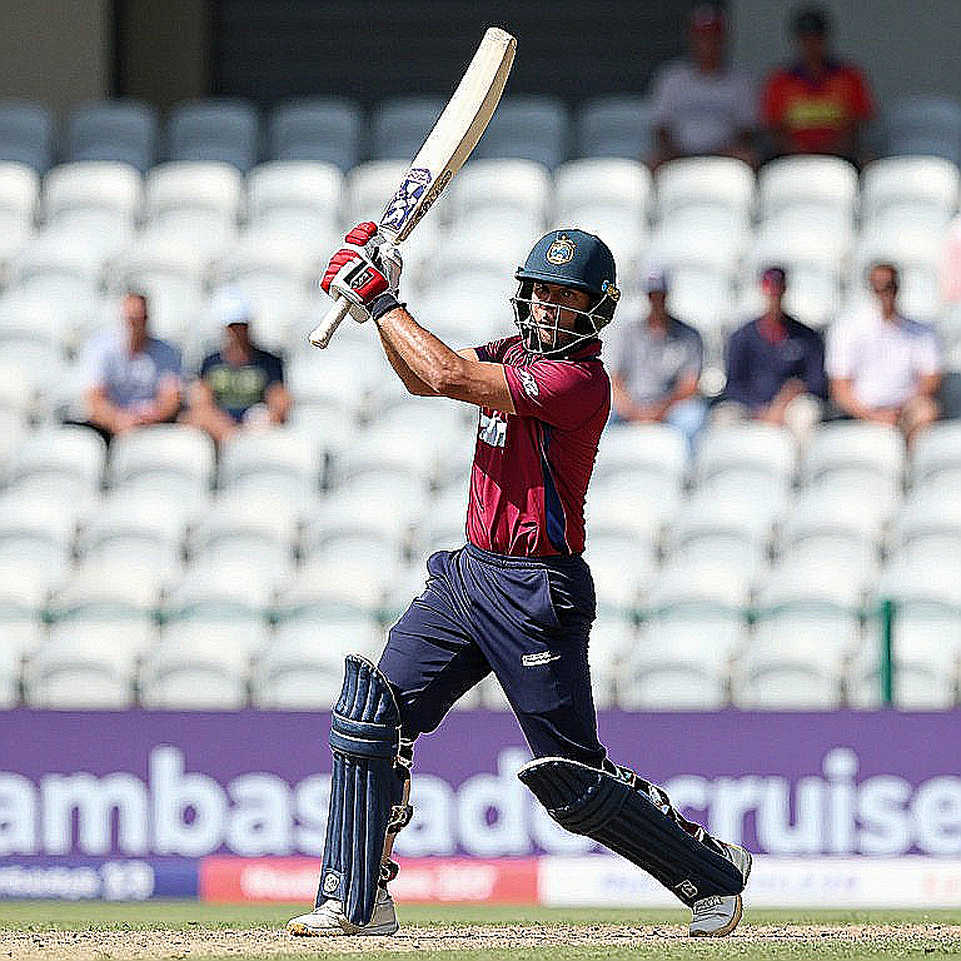
Rain stopped play at the fourth Test of India's tour of Australia, and in that pause a conversation took place which Ryan ten Doeschate has now made public. I was in Ahmedabad, watching that tour twice over — once live, once on replay — and the pattern filling my notebook was not a technical one. It was a pattern of repetition. Kohli was not being dismissed in three different ways. One corridor, one edge, one slip cordon. When the same error appears in the same place across four innings, it stops being an error and becomes a column somebody has to fill.
The loudest anomaly in this whole story is the absence of numbers. No average, no strike rate, no dismissal count, no pitch report, no weather, no name for the bowler who kept hitting the same line. What survives as news is not a technique. It is the room in which a technique had to be discussed. And that room, in ten Doeschate's telling, is a room where coaches are afraid.
So this piece is not about Kohli's cover drive. It is about an assistant coach who had to wait for a rain break to raise a technical point with a senior player, and who then had to say out loud that many of his colleagues never raise it at all.
Context: the source chain and the definitions I fixed first
What is verified: an away Test series in Australia, the fourth Test, a rain interruption, and a conversation inside it. Ten Doeschate is a former India coach; he spoke on the talkSPORT Cricket podcast; the Times of India reported the quotes. Kohli responded positively and explained why he wanted to keep playing the shot his way. The desired result did not arrive by the end of the series. Ten Doeschate also said player influence has grown, that coaches hesitate because an intervention can be read as a coach justifying his own employment, and that the craft lies in wording and delivery.
What is not verified: the venue, the age of the pitch, cloud cover, humidity, the identity of the bowlers who produced those dismissals, any dismissal distribution, any home-away split, any twelve-month trend. The podcast recording is not supplied. The publication date is not stated.
I fix definitions before I write, because an undefined column drifts. Outside off stump: the corridor that tempts a batter, not the corridor he must play. Shot selection: the decision to attack, defend or leave, which precedes technique. Technical overcorrection: an adjustment large enough to break a movement that was already working. Cognitive overload: how many instructions occupy the mind in the ten minutes before a fast bowler runs in.
With those fixed, this is an audit of a conversation, not of a scorecard. Every claim below carries its confidence level.
Core: three mechanisms, and not one of them named
Repeated dismissals outside off stump can only come from three places. The first is initial movement — whether the front foot reaches the ball or stays behind it. The second is head position and balance — a batter reaching away from his body loses the weight forward and the bat arrives under the ball. The third, and the most ignored, is the decision itself: which delivery is a drive and which is a leave. The source names none of the three. That does not mean the problem was imaginary; it means a pattern visible on television is still a hypothesis, not a diagnosis. My confidence here is medium, not high.
The second misreading is more common. Ten Doeschate did not tell Kohli to abandon the off-side drive. He said Kohli explained his reasoning. That distinction is tactical rather than technical. A risky shot can be perfectly rational if the runs it produces outweigh the dismissal risk the batter is accepting. For Kohli the cover drive is not decoration; it is income. The question is never whether to drive. The question is which deliveries belong in the drive category and which belong in the leave category. That is a decision problem, not a wrist problem. Confidence: high.
The third element is timing. The conversation happened during a rain break, not ten minutes before a fast bowler's first ball. This looks like a minor detail; it is the most professional thing in the story. Test batting runs on automatised decisions, and changing a movement means relearning it — which cannot happen in the middle. Three technical instructions immediately before facing pace are not a correction. They are hesitation. The batter pays for that hesitation, not the coach. Confidence: high.
Fourth, the organisational layer. Ten Doeschate's heaviest sentence is not technical but professional: coaches are afraid. He was specific about what they fear — being seen to speak only in order to justify their own employment. That is not a technical fear. It is a job fear, and job fear always sits closest to the most expensive player in the room. The consequence is mechanical: the pattern is identified, the conversation is postponed, and the cost of the postponement appears in the next series.
Fifth, the outcome. The improvement did not arrive by the end of the series. That is a fact, not a finding. Using one series to prove that technical advice failed is as careless as using one good innings to prove the problem has gone. Test habits change over months, not weeks, and sometimes they do not change at all — they merely go quiet.
Sixth, my real objection: the leap to team level. This is one batter's story. Turning it into a weakness across India's batting order, or a crisis in Indian coaching, goes past the evidence. Nothing in the source suggests other batters had the same issue, or that selectors and board were in conflict. What exists is one individual pattern, one coaching process, one professional conversation.
Seventh, and most important: what a proper audit would require. The claim only becomes technical when every dismissal is logged with bowler type, over phase, line and length, match state, and the total number of drives played into that corridor during the same innings. That last figure matters most, because a dismissal is a numerator everyone can see while the denominator stays hidden. Two edges from thirty drives and two edges from twelve drives are both 'two', and they are not the same story. Until the denominator is public, even the word 'recurring' is an estimate, not a measurement. Which is why I file this episode as a case study in communication rather than in technique.
One paragraph stays unquantified, because some things do not fit a table. My notebook started as a rehab log and ended as a title, and the most useful thing it ever recorded was not a table. It was the sound of a room. A physio's aside delivered without looking up. A coach half-turned, saying leave it. The truest image of that rain break is not a chart: it is a batter in whites and a coach beside him asking a question instead of issuing an order. That scene is never photographed, and that is precisely why no model holds it.
Contrarian: the headline did more work than the evidence
The framing puts fear at the centre. Fine. But the conversation described on the podcast is an example of method, not of fear. Ten Doeschate chose dialogue over confrontation, listened to the player's reasoning, and the player did not push back. The strongest evidence in this story is not that a coach found courage. It is that a player listened. That cuts against the assumption that senior players keep the door shut on technical feedback.
The second contrarian point is that the courage narrative is unfalsifiable. A coach speaks and results do not follow — what has been proven? Nothing. A coach stays silent and results do not follow — what has been proven? Again nothing. Both roads end in the same place: a story. I will only treat this episode as meaningful once ball-by-ball data from subsequent innings exists and a standard fixed in advance is applied to it. A prediction recorded without a date and without conditions is just a good-sounding sentence.
The third possibility nobody raises: perhaps the drive was not the problem but the price of the role. When a top order collapses early, the batter at three or four cannot indulge a taste for leaving; he has to score, and his most reliable scoring route is that same off-side drive. The risk may not have lived in the shot at all, but in the responsibility that made the shot compulsory. The source gives no batting-depth data, so this is explicitly an inference, not a conclusion.
The fourth point nags at me most: what data built the diagnosis? A pattern seen on broadcast replays and a pattern built from ball-tracking are not the same object. The first is shaped by camera angle; the second by the ball's actual path. I am not claiming the coaching staff lacked data. I am claiming the available record does not say what the diagnosis rested on. And when the provenance of a diagnosis is private, the interpretation of its outcome cannot be public either.
Takeaway: what to watch, and where I will be wrong
The useful lesson is procedural. The real question for India's Test setup is whether technical feedback can become a routine, documented process in which speaking to a senior player stops looking like an act of bravery. Feedback that is routine carries less weight; and when it carries less weight, the hesitation falls away. A coach's authority is not measured by whether he can speak. It is measured by whether speaking has become unremarkable.
I am recording this with a date, because my model was wrong in public for six weeks and that was the point. Across the next four Test innings I will track two things: the share of deliveries left alone outside off stump within the first twenty balls, and the number of drives played into that corridor. If the leave ratio rises and the edges stop, the problem was decision-making. If the leave ratio rises and the runs dry up too, the coaching was right and the price was very high. If the ratio does not move, the diagnosis was wrong — mine included, since I treated the pattern as real. All three answers sit in one place: the ball-by-ball sheet of that innings, which nobody has published yet.
Limits, stated plainly. This analysis rests on the Times of India report of comments Ryan ten Doeschate made on the talkSPORT Cricket podcast. The recording is unverified, the publication date is unavailable, the venue and weather are unknown, and no batting average, strike rate, dismissal distribution or home-away split has been supplied. Nothing here claims a career-level decline, and nothing here is evidence of a collective failure in India's batting. What is established is smaller: a pattern repeated, a conversation held, held well, and no immediate result. The rest is a column still waiting to be filled — and in my trade, filling an empty column with a zero is the costliest mistake available.