
Wellington’s Two 113s: A Run-Fest and a Selection Error
कोर उत्तर: वेलिंगटन के दो मुकाबलों में 113 का अर्थ अलग था: अभिषेक शर्मा ने टी20 अंतरराष्ट्रीय में 38 गेंदों पर 113 रन बनाए, जबकि बारिश से प्रभावित वनडे में भारत 113 रन पर आउट हुआ। वनडे का निर्णायक मुद्दा अक्षर पटेल को पांचवें नंबर पर भेजना और शॉर्ट गेंद के खिलाफ भारत की तैयारी रहा। मुख्य तथ्य: - अभिषेक शर्मा: 38 गेंदों पर 113 रन; स्ट्राइक रेट लगभग 297। - भारत ने टी20 अंतरराष्ट्रीय में शुरुआती पांच ओवरों में 100 रन बनाए। - वनडे में बारिश के बाद लक्ष्य लगभग 135 रन बताया गया। - अक्षर पटेल शॉर्ट गेंद के खिलाफ समान शॉट पर लगातार दो मुकाबलों में आउट हुए। - केएल राहुल ने उसी पिच पर उछाल और पुल शॉट को बेहतर नियंत्रित किया। स्रोत: उपलब्ध मैच-विश्लेषण; प्रकाशन तिथि और आधिकारिक स्कोरकार्ड उपलब्ध नहीं। संबंधित प्रश्न: प्रश्न: वनडे में भारत की सबसे बड़ी रणनीतिक चूक क्या थी? उत्तर: सीम और उछाल वाली पिच पर परिस्थितियों के बजाय बाएं-दाएं संयोजन को प्राथमिकता देकर अक्षर पटेल को पांचवें नंबर पर भेजना। प्रश्न: क्या अभिषेक शर्मा की 113 रन की पारी लंबे समय की सफलता साबित करती है? उत्तर: नहीं, इसकी पुष्टि के लिए कम से कम 10 टी20 अंतरराष्ट्रीय पारियों का नमूना आवश्यक है। प्रश्न: भारत के लिए अगला परीक्षण क्या होगा? उत्तर: अगली सीम वाली पिच पर केएल राहुल की बल्लेबाजी भूमिका और अक्षर पटेल के खिलाफ शॉर्ट गेंद से जुड़े dismissal pattern को देखना।
Wellington produced two Indian 113s in contrasting formats. In the T20I, Abhishek Sharma struck 113 from 38 balls, while India’s rain-affected ODI innings ended at 113, leaving an amended target of roughly 135 looking far more difficult than the number suggested.
The comparison is useful as a headline, but it is not a statistical one-to-one comparison. The T20I innings was shaped by fielding restrictions, a full attacking tempo and an extraordinary opening burst. The ODI collapse came in a shortened chase against a new-ball attack that repeatedly used bounce. The shared number is the entry point; the tactical systems were different.
I keep a field map for the moments the scoreboard forgets. In Wellington, that map shows two opposite patterns. India made the T20I irrelevant inside the first six overs, while New Zealand made the ODI chase uncomfortable by targeting the same surface with sustained short-pitched bowling.
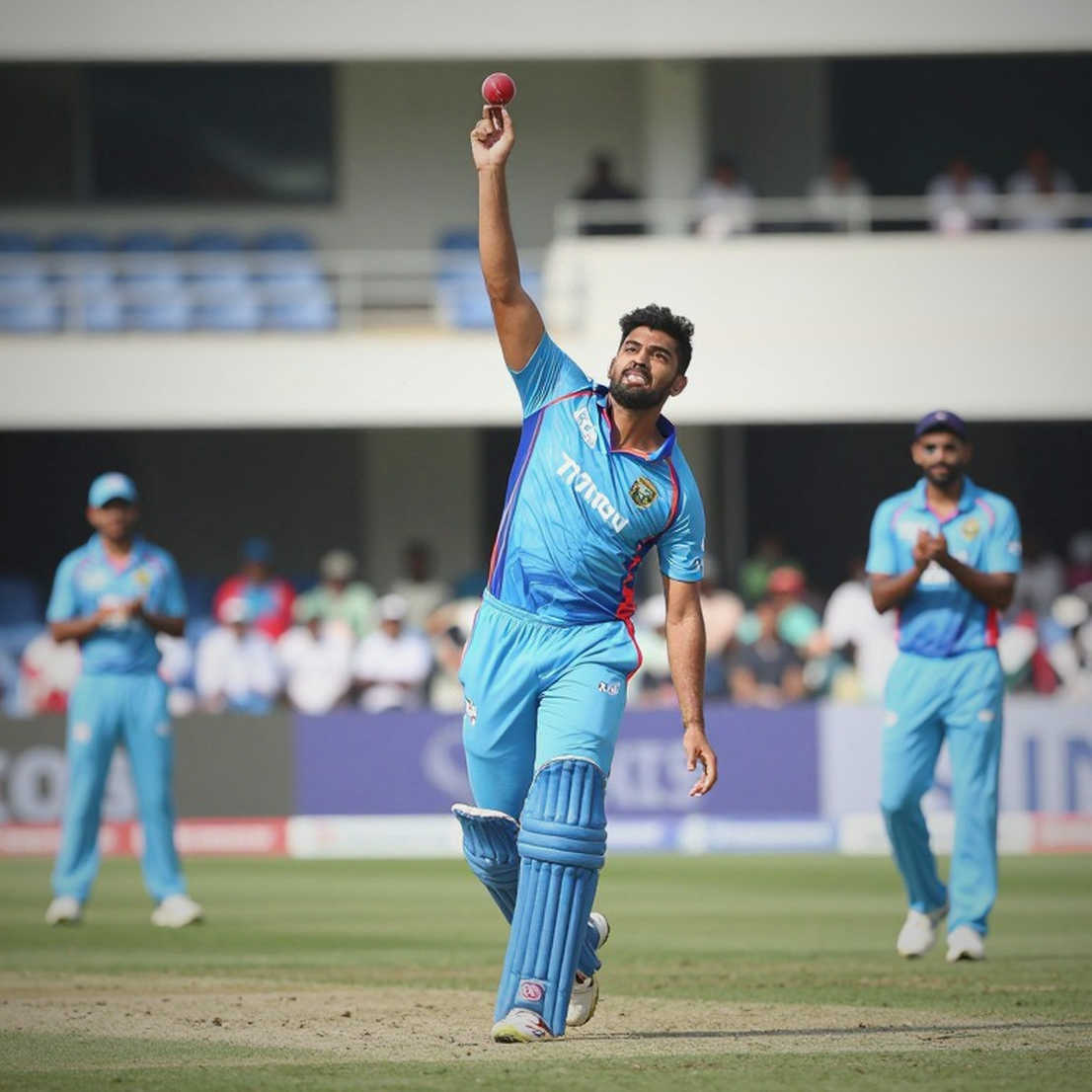
T20I: Abhishek shortened the match to the powerplay
Abhishek’s 113 from 38 balls translates to a strike rate close to 297, an extreme outlier even in modern T20 cricket. The more useful figure is India’s reported 100 runs in five overs. It identifies the powerplay as the decisive phase, rather than the death overs. Once the opening pair scored at that rate, the bowling side had little time to build a field or settle on a length.
Abhishek Sharma and Vaibhav Sooryavanshi attacked different release angles. Full balls were driven, short balls were pulled and width was punished with quick hands. This was more than a boundary compilation. The batting repeatedly disrupted the bowler’s next-ball decision.
The sample still needs discipline. A 38-ball innings can show a player’s ceiling, but it cannot establish a sustained international level. Weather and surface conditions may also have assisted strokeplay. The next useful test is a 10-innings window, not another headline built around one strike rate.
The T20I selection also points towards a different top-order model. Abhishek Sharma and Vaibhav Sooryavanshi represent an aggressive, high-tempo group that treats the first six overs as the main scoring opportunity. That group is structurally different from India’s ODI top order and should not be used to judge it directly.
ODI: The plan was more important than the pitch alone
Rain reduced the ODI contest and altered the target. In such a chase, the middle-overs rebuilding phase becomes shorter and early wickets become more expensive. New Zealand understood that equation and attacked with repeated short deliveries from both ends.
The Wellington drop-in surface, affected by weather, offered variable bounce. India’s top order did not create a reliable response. Shubman Gill fell early, Virat Kohli gave away his wicket with a loose shot and Rohit Sharma’s resistance ended with another high-risk decision. The dismissals were not all unplayable deliveries. Several were consequences of choosing the wrong response to the length.
The central selection question was Axar Patel at No. 5. The management rationale was to break the sequence of right-handers with a left-hand option. That can work on slow, turning pitches, and Axar’s role had succeeded in conditions similar to Dubai. Wellington demanded something else. It demanded a batter able to control bounce before thinking about the hand combination.
Axar was repeatedly forced towards cuts and pulls against the short ball, and a similar shot had contributed to his dismissal in the series opener. Repeated dismissal modes across two matches are a technical signal, not merely bad luck. The problem was role fit: a condition-specific promotion had been treated like a default selection rule.
KL Rahul provided the direct counterfactual. On the same surface and against the same bowling, Rahul rode the bounce, controlled the pull and appeared more comfortable judging the ball at body height. When a specialist batter handles the exact threat that exposes a promoted all-rounder, the pitch remains part of the explanation, but selection becomes the actionable variable.
Shreyas Iyer briefly tried to answer short bowling with aggression, yet another well-directed short delivery ended the contest. India therefore had more than one issue: some dismissals were technical, while others were loose decisions. Net practice can improve the first problem. The second requires a clearer match plan.
The strongest evidence came from India’s own bowlers. India used the short ball effectively against New Zealand’s batters, who also struggled to control the bounce. The surface was not uniquely hostile to India. India’s bowling unit had a usable plan for it; the batting unit did not show an equally dependable counter-plan. That is a preparation asymmetry.
The contrarian reading
It would be easy to call this a two-faced Indian team: a T20I powerhouse and an ODI side unable to play bounce. That conclusion is too broad. Abhishek Sharma’s hundred is a single-match outlier, while the ODI was affected by rain, the revised target, the toss and venue conditions. One match cannot establish a series-wide batting decline.
The Axar decision is more defensible as a criticism because it has three connected pieces of evidence: New Zealand’s clear short-ball method, Axar’s repeated dismissal pattern and Rahul’s contrasting control. The success of Axar’s promotion on slow turning pitches appears to have been extended into a setting where its central assumption did not hold.
Based on my years of watching matches, selection errors often appear before the scorecard begins to explain them. The innings finished at 113, but the bigger decision had been made on the team sheet. The spreadsheet was not the answer; it was the first question with cells: which batter had the lowest-risk solution to this pitch?
The next verification
India’s next seaming fixture should test whether the short-ball problem was specific to Wellington or part of a wider pattern. If KL Rahul moves higher in the order and Axar’s position is determined by pitch profile, that will indicate a correction. If the same dismissal mode returns, the issue will outlive one rain-affected game. Abhishek Sharma’s next 10 T20I innings should receive the same scrutiny. Wellington supplied two 113s; India now has to decide which one should change the next team plan.